An embankment dam
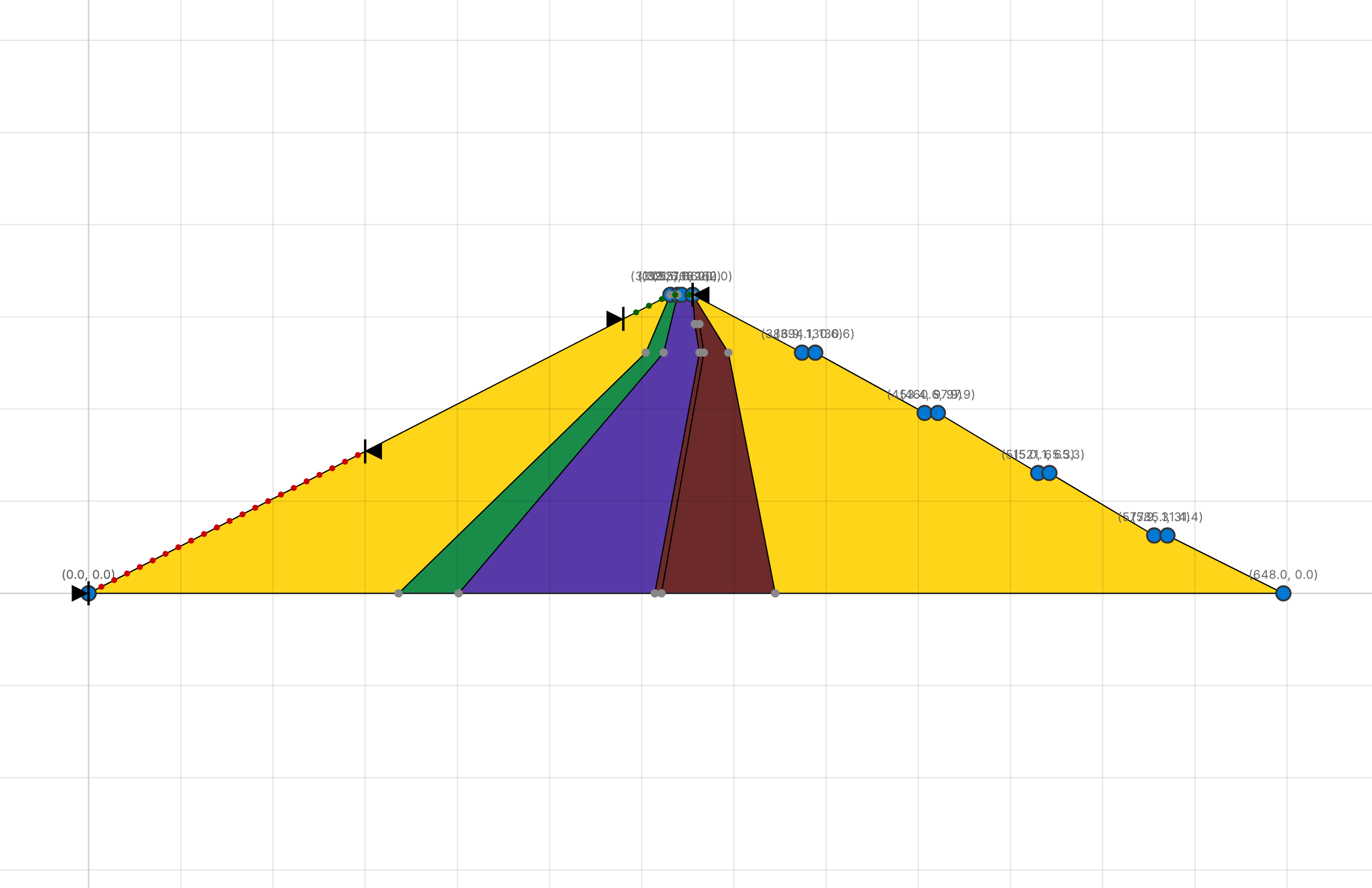
A zoned dam analysed from right to left, and the Morgenstern–Price λ plot.
This tutorial uses the Talbingo dam, a rockfill dam with a clay core and a published benchmark for slope stability programs. Open Help › Benchmarks and click Talbingo Dam.
1. The zones
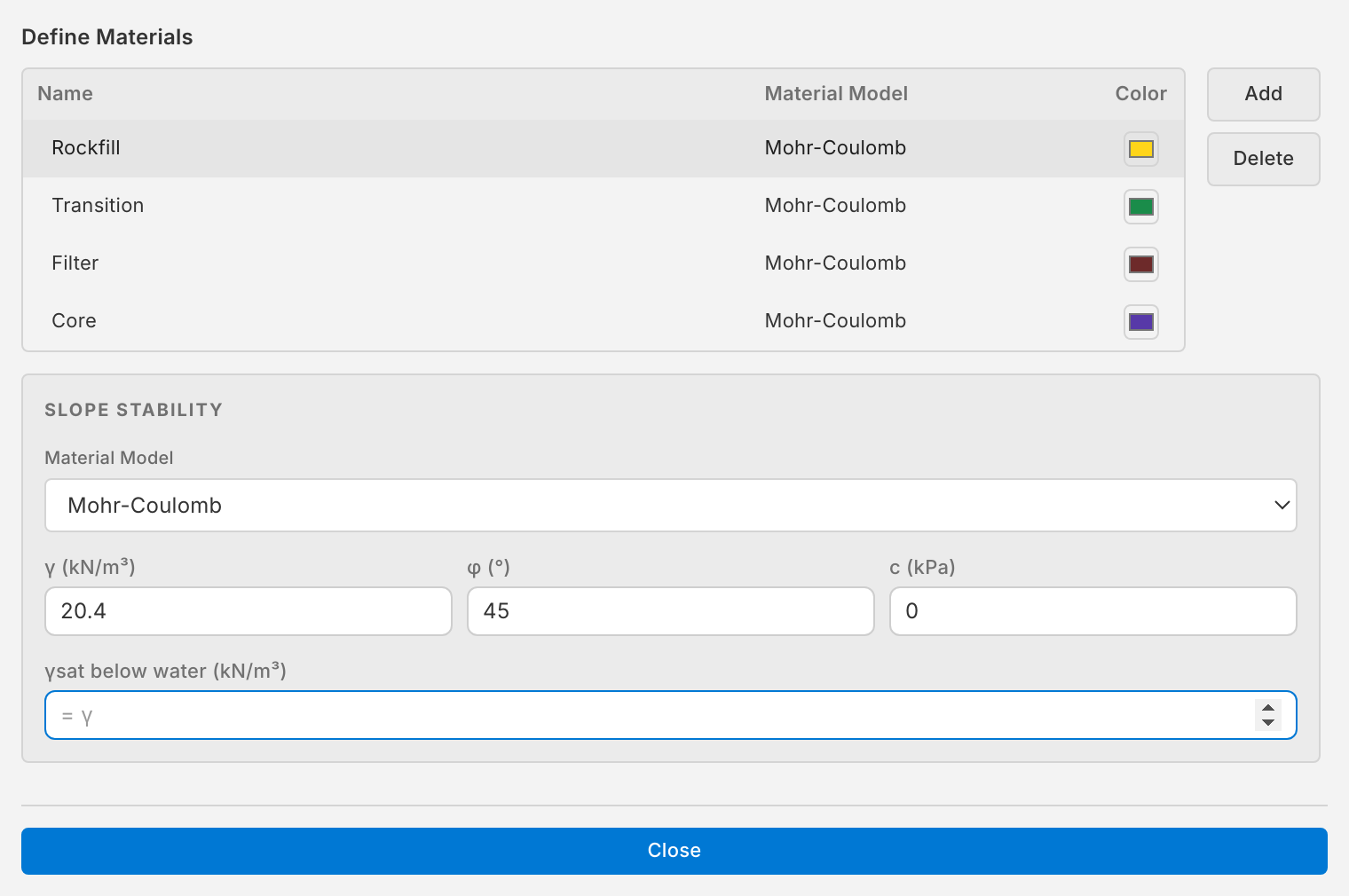
Open Model › Materials › Define. The rockfill, transition and filter are frictional (φ = 45°, γ = 20.4 kN/m³); the core is a clay with c = 85 kPa and φ = 23° (γ = 18.1 kN/m³).
2. Direction
This section fails towards the left. In Model › Analysis › Options, Analysis Direction is set to Right to left. For a slope where either face could fail, tick Analyse both sliding directions instead.
3. Run
Click ▶ Run.
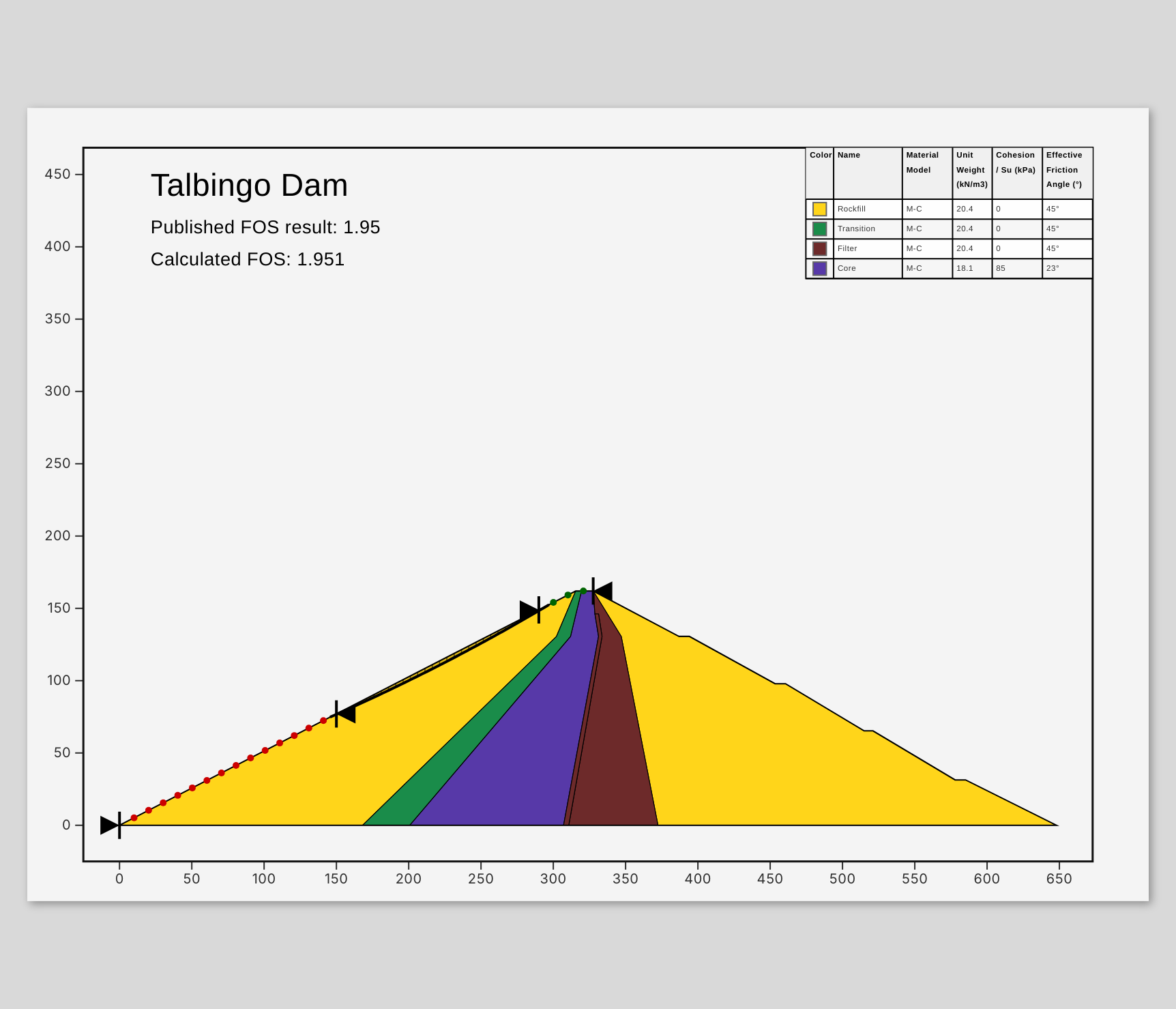
The factor of safety is 1.95, equal to the published value.
4. Check the equilibrium
Morgenstern–Price finds the factor of safety where moment and force equilibrium give the same value. Open Results › Plots › Results Plot and choose Lambda vs Fm/Ff:
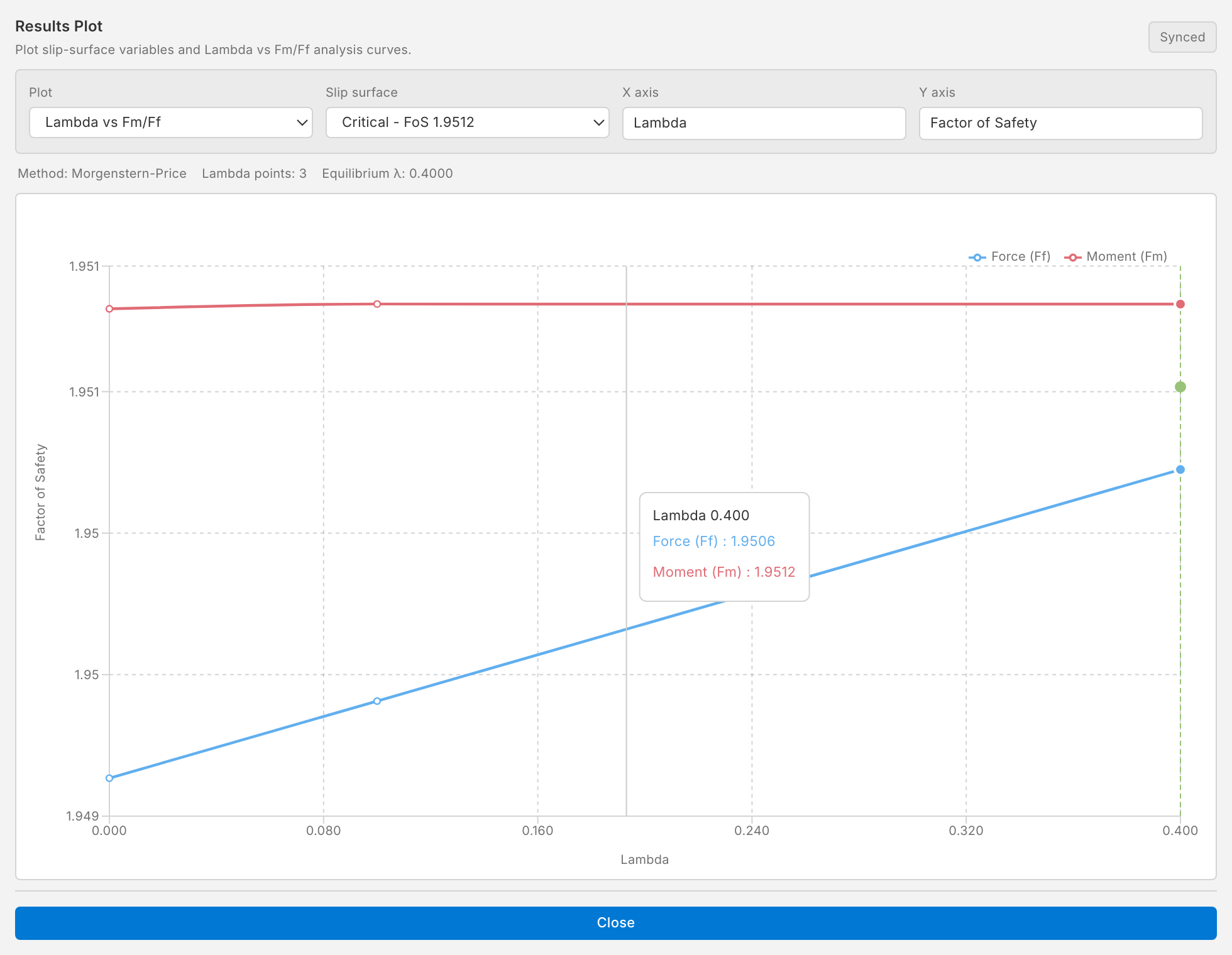
In a frictional shell the two curves lie close together: the result hardly depends on the interslice forces. Where they diverge strongly, the choice of interslice function matters more.